
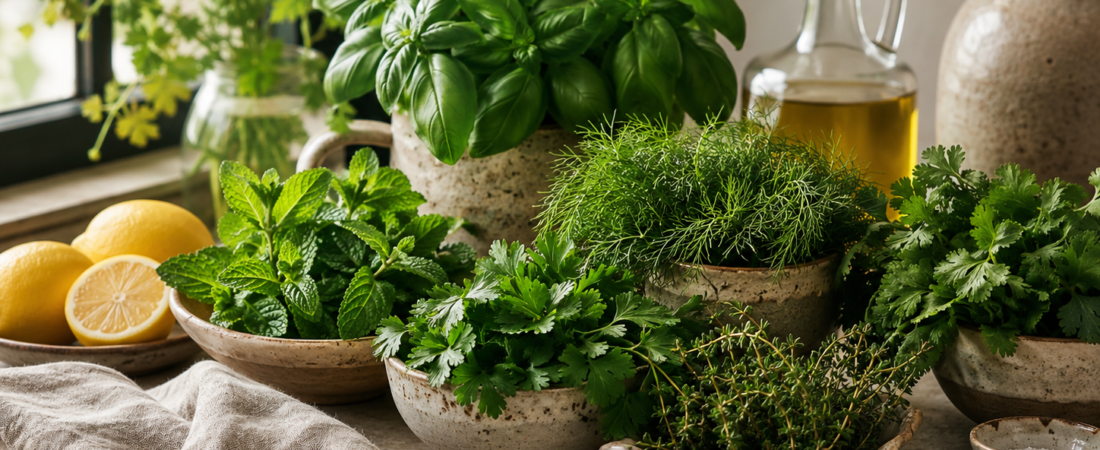
Why Fresh Herbs Make Simple Food Feel Elevated
Fresh herbs have a quiet kind of magic in the kitchen. They can take a simple bowl of soup, a tray of roasted vegetables, a salad, a tart, or a piece of fish and make it feel brighter, fresher, and more intentional.
At The Verdant Table, herbs are more than a garnish. They are part of the flavor, color, fragrance, and beauty of a dish.
A handful of dill can soften a lemony yogurt sauce. Basil can make tomatoes feel sweeter and more alive. Mint can bring freshness to grains, peas, fruit, and salads. Cilantro can lift a curry, taco, or rice bowl. Thyme can make roasted vegetables, mushrooms, and baked dishes feel earthy and elegant.
Fresh herbs are one of the simplest ways to make food feel elevated without making it complicated.
Herbs Add Freshness
One of the easiest ways to wake up a dish is to finish it with fresh herbs.
A soup may be warm and comforting, but a little parsley, cilantro, dill, or basil brings brightness to the bowl. A roasted vegetable dish may be rich and golden, but herbs add freshness and balance. A creamy sauce may feel smooth and satisfying, but chopped herbs can make it feel lighter and more layered.
Fresh herbs help food feel alive. It gives it life.
Herbs Add Color
Food becomes more inviting when there is contrast on the plate. Fresh herbs bring instant color, especially to dishes that are creamy, golden, earthy, or neutral.
A sprinkle of green over a bowl of coconut curry. Fresh basil on a tomato galette. Dill over roasted salmon. Mint over a citrus salad. Parsley over stuffed peppers. Cilantro over blackened shrimp tacos.
These small touches create visual freshness and make a dish feel finished.
At The Verdant Table, beauty is not about perfection. It is about thoughtful details that help food feel cared for.
Herbs Add Fragrance
Before we taste food, we experience its aroma. Fresh herbs bring fragrance that dried herbs often cannot fully recreate.
Basil feels sweet and peppery. Dill feels soft and grassy. Mint feels cooling. Cilantro feels bright and citrusy. Rosemary feels woodsy and strong. Thyme feels earthy and delicate. Parsley feels clean and fresh.
These aromas make food more sensory. They help transform everyday cooking into something more memorable.
Herbs Add Balance
Herbs are especially helpful in plant-forward cooking because they bring balance.
They can brighten rich dishes, soften spicy ones, lift creamy textures, and add complexity to simple ingredients. A dish made with beans, grains, vegetables, seafood, or roasted squash can feel completely different depending on the herb used at the end.
For example:
- Basil pairs beautifully with tomatoes, zucchini, pasta, berries, and ricotta.
- Dill works well with salmon, cucumbers, potatoes, yogurt, peas, and lemon.
- Mint lifts peas, grains, fruit, carrots, salads, and yogurt sauces.
- Cilantro brightens curries, tacos, rice bowls, lentils, and lime-forward dishes.
- Parsley adds freshness to soups, stews, roasted vegetables, and grain salads.
- Thyme brings elegance to mushrooms, squash, tarts, beans, and roasted onions.
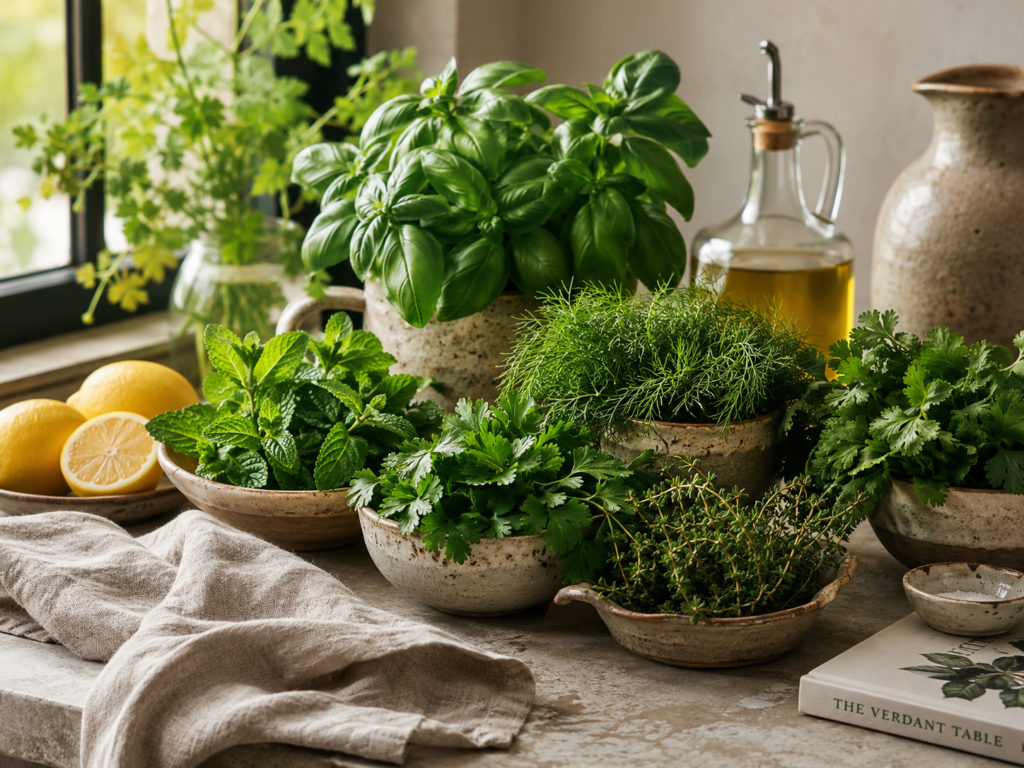
How to Use Fresh Herbs Beautifully
Fresh herbs do not need to be used in large amounts to make an impact.
Try these simple approaches:
- Chop soft herbs and sprinkle them over finished dishes.
- Tear basil or mint by hand for a more organic look.
- Stir herbs into yogurt, tahini, or vinaigrettes.
- Add herbs to grain salads right before serving.
- Use herb sprigs as a simple garnish on cakes, tarts, or platters.
- Blend herbs into sauces, pestos, dressings, and marinades.
- Finish soups with herbs and a drizzle of olive oil.
The key is to add delicate herbs near the end so their color and flavor stay fresh.
Soft Herbs vs. Hardy Herbs
Soft herbs include basil, cilantro, parsley, dill, mint, chives, and tarragon. These are usually best added fresh at the end of cooking.
Hardy herbs include rosemary, thyme, sage, oregano, and bay leaves. These can often handle heat and work beautifully in roasted, baked, simmered, or slow-cooked dishes.
Knowing this difference helps you use herbs with more confidence.
A Small Detail That Changes Everything
Fresh herbs may seem like a small detail, but they can change the entire feeling of a meal. They make food look more abundant, taste more layered, and feel more intentional.
That is why they appear so often at The Verdant Table.
They are a reminder that elegance does not have to be complicated. Sometimes it is as simple as a little basil over tomatoes, dill in a sauce, mint in a salad, or thyme over mushrooms.
A small handful of herbs can bring the whole table to life.
Warmly,
The Verdant Table
Elevated plant-forward recipes for a beautifully nourished life.
Leave a Reply